
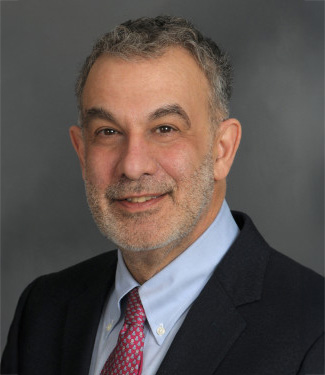
Distinguished Professor and
Department of Biomedical Informatics
Endowed Chair Professor
Department of Biomedical Informatics
Dr. Joel Saltz is a Distinguished Professor and the Founding Chair of the Department of Biomedical Informatics at Stony Brook University, where he also holds the endowed Cherith Chair. A physician-scientist with dual training in computer science and medicine from Duke University’s MSTP program, Dr. Saltz has been a driving force in the creation and leadership of three major Biomedical Informatics departments—at Ohio State, Emory, and Stony Brook. His work lies at the intersection of artificial intelligence, digital pathology, and biomedical informatics, and his department at Stony Brook is uniquely positioned across both the School of Medicine and College of Engineering, reflecting its interdisciplinary nature.
A pioneer in digital pathology, Dr. Saltz was the first to publish on whole slide virtual microscopy and has developed many of the foundational technologies underpinning modern computational pathology. His work in image analysis, machine learning, and big data has led to breakthroughs in cancer diagnostics and prognosis, including systems that link pathology image features to genomic data and patient outcomes. He has also played a major role in clinical informatics, designing predictive models for hospital readmissions and clinical decision support systems, and is board-certified in Clinical Pathology and Clinical Informatics following residency at Johns Hopkins University.
Dr. Saltz’s lab leads cutting-edge research in AI-driven pathology, developing interpretable machine learning frameworks and generative models like ZoomLDM and Gen-SIS. These systems can produce realistic synthetic pathology images from text and magnify detail at gigapixel scale, aiding in diagnosis and reducing the need for human annotation. Other tools such as SI-MIL, GECKO, and HIPPO allow clinicians to understand AI predictions through human-interpretable concepts and visual explanations. His team is also building toward autonomous pathology systems that mimic human diagnostic processes, akin to self-driving cars.
Beyond methodology, Dr. Saltz’s work includes large-scale analysis of tumor-infiltrating lymphocytes (TILs), providing critical insights for cancer immunotherapy. He has produced public datasets of TIL spatial maps across multiple cancer types, now widely used in research.
His lab continues to develop software tools like WSinfer for patch-level predictions, and has achieved state-of-the-art performance in classifying tumor subtypes, including brain and lung cancers. In the field of high-end computing and data science, Dr. Saltz contributed early innovations such as the DataCutter system and Active Data Repository—precursors to today's map-reduce paradigms. His foundational work in runtime compiler frameworks and spatial data structures earned him the prestigious 2024 VLDB Test of Time Award. With appointments at institutions including Yale and the University of Maryland, Dr. Saltz’s career exemplifies a fusion of deep technical expertise and medical insight, shaping the future of computational medicine.